
Led Vs Incandescent, Watts Better?
페이지 정보
작성자 Dedra 작성일25-09-21 01:59 조회17회 댓글0건관련링크
본문
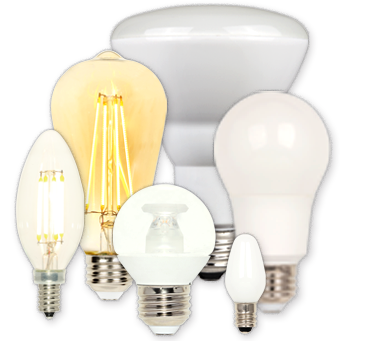 Led vs incandescent, watts better? Incandescent bulbs are probably the most acknowledged lighting choices accessible, however they're additionally the most dated. A lot of these bulbs produce mild when electricity heats a filament contained in the bulb. Light Emitting Diode, or LED bulbs, produce mild utilizing a semiconductor crammed with electrons that fill holes in the fabric when an electric current is applied. Therefor, LEDs require much less power to supply the same quantity of light as an incandescent bulb of related wattage. Lumens and wattage are terms that are often used interchangeably, but they are actually fairly totally different. Wattage is the amount of vitality the bulb makes use of to provide gentle. Lumens are a measure of the bulb’s brightness. A 60-watt incandescent bulb requires 60 watts of electricity and emits about 900 lumens, whereas an LED bulb requires only eight watts to provide the same quantity of light. Shade temperature is a crucial factor while you examine gentle bulbs. Usually listed on the package deal, the colour temperature is measured in degrees of Kelvin from warm yellow mild (2500 K) to cool blue gentle (7000 K).
 Different lighting colors can have an effect on each your mood and the decor in your home. Yellow gentle is mostly considered stress-free, while blue lighting is energizing. Both incandescent and LEDs are available in a spread of shade temperatures, but incandescent bulbs are usually on the heat yellow finish of the spectrum, while LEDs are typically cool blue. Both sorts provide ‘daylight’ brilliant white choices which mimic pure lighting. From brightness ranges to effectivity and lifespan, there are a lot of components to consider when making an incandescent vs LED light bulb comparability. Each of the contenders has its execs and cons. LEDs blaze into action as quickly as the change is flipped, whereas incandescent bulbs take some time to warm up and reach their full brightness. During use, much of the energy used by incandescent bulbs is wasted as heat. Incandescent bulbs emit eighty five BTUs of heat throughout every hour of use. LEDs keep cool, emitting only 3.Four BTUs. Incandescent bulbs are delicate to low temperatures and humidity, which may end up in decreased performance and even breakage in inclement weather.
LEDs can resist both scorching and cold temperatures as well as humid circumstances, which means you can use them inside and outdoors in damp areas. Heavy-weight LEDs have thick walls and a dynamic design that may withstand bumping and jarring. The thin glass and delicate spherical shape of incandescent EcoLight smart bulbs break easily below stress. The standard lifespan of an incandescent bulb is around 1,200 hours, whereas long-lasting LEDs can go the gap, with every bulb providing a mean of 50,000 hours of mild. Spherical 3: Knock Out! Whereas incandescent and LED bulbs are both mercury-free and RoHS compliant, EcoLight smart bulbs each have an effect on the setting by means of carbon dioxide emissions. Utilizing 30 incandescent bulbs every year ends in 4,500 pounds of emissions, while the identical variety of LED bulbs releases solely 451 pounds. When considering incandescent vs. LED bulbs, EcoLight smart bulbs the quantity of power used per 12 months may be the deciding issue. Houses with 30 incandescent bulbs use about 3,285 kilowatts of electricity each year, whereas the identical variety of LED bulbs use solely 329 kilowatts. LEDs are the clear winner in the battle of the bulbs. Incandescent bulbs are dated expertise, and are slowly being phased out in favor of choices with improved effectivity, sturdiness and lifespans. Switching to LED fixtures consumes much less energy and reduces your environmental influence whereas including brighter lighting throughout your home.
And if somebody did manage to build such a vehicle, actually it wouldn't be fast, nimble or crashworthy. However even if you gave such automotive fantasies the benefit of the doubt, there was just no manner a automobile that managed to perform all that could also be roomy. Comfort must be sacrificed at the altar of motoring efficiency. Or so it as soon as seemed. In all fairness, given the technology obtainable until lately, those arguments made sense. But efforts to rethink and re-engineer the vehicle in the past couple decades are transforming formerly implausible concepts into feasible ones. Amory Lovins, founder and chief scientist of the Rocky Mountain Institute (RMI), coined the name "Hypercar" to describe his concept for a spacious, EcoLight SUV-like car that delivered astonishing fuel economic system without making any of the compromises people usually attach to "financial system" vehicles. RMI's Hypercar vision first entered the public arena in the 1990s. A agency, Hypercar Inc., spun off from the RMI research (today Hypercar Inc. known as FiberForge) to run with the idea.
댓글목록
등록된 댓글이 없습니다.