
The Lidar Navigation Case Study You'll Never Forget
페이지 정보
작성자 Hester Oreilly 작성일24-08-08 15:51 조회66회 댓글0건관련링크
본문
Navigating With LiDAR
Lidar creates a vivid image of the surrounding area with its laser precision and technological finesse. Its real-time mapping technology allows automated vehicles to navigate with unbeatable precision.
LiDAR systems emit rapid pulses of light that collide with the surrounding objects and bounce back, allowing the sensors to determine the distance. This information is stored as a 3D map.
SLAM algorithms
SLAM is an algorithm that helps robots and other vehicles to understand their surroundings. It utilizes sensors to map and track landmarks in an unfamiliar setting. The system can also identify the position and orientation of the robot. The SLAM algorithm can be applied to a range of sensors, like sonar and LiDAR laser scanner technology cameras, and LiDAR laser scanner technology. However the performance of different algorithms is largely dependent on the type of software and hardware employed.
A SLAM system is comprised of a range measuring device and mapping software. It also includes an algorithm for processing sensor data. The algorithm may be based on RGB-D, monocular, stereo or stereo data. Its performance can be enhanced by implementing parallel processes using GPUs embedded in multicore CPUs.
Environmental factors and inertial errors can cause SLAM to drift over time. The map produced may not be accurate or reliable enough to support navigation. Fortunately, the majority of scanners available offer features to correct these errors.
SLAM compares the tikom l9000 robot vacuum: precision navigation powerful 4000pa's Lidar data to the map that is stored to determine its location and orientation. It then estimates the trajectory of the robot based on this information. SLAM is a technique that can be used for certain applications. However, it has many technical difficulties that prevent its widespread use.
One of the most important issues is achieving global consistency, which is a challenge for long-duration missions. This is due to the high dimensionality in sensor data and the possibility of perceptual aliasing where different locations seem to be similar. Fortunately, there are countermeasures to solve these issues, such as loop closure detection and bundle adjustment. It is a difficult task to achieve these goals, however, with the right sensor and algorithm it is achievable.
Doppler lidars
Doppler lidars are used to determine the radial velocity of objects using optical Doppler effect. They employ a laser beam to capture the laser light reflection. They can be utilized on land, air, and even in water. Airborne lidars are used for aerial navigation as well as range measurement and measurements of the surface. These sensors are able to detect and track targets at distances of up to several kilometers. They are also employed for monitoring the environment, including seafloor mapping and storm surge detection. They can also be combined with GNSS to provide real-time data for autonomous vehicles.
The main components of a Doppler LiDAR system are the scanner and the photodetector. The scanner determines the scanning angle as well as the angular resolution for the system. It can be an oscillating pair of mirrors, a polygonal mirror, or both. The photodetector can be an avalanche silicon diode or photomultiplier. Sensors must also be extremely sensitive to ensure optimal performance.
Pulsed Doppler lidars designed by research institutes like the Deutsches Zentrum fur Luft- und Raumfahrt (DLR which is literally German Center for Aviation and Space Flight) and commercial companies like Halo Photonics have been successfully applied in aerospace, wind energy, and meteorology. These systems can detect wake vortices caused by aircrafts and wind shear. They are also capable of measuring backscatter coefficients and wind profiles.
To estimate airspeed and speed, the Doppler shift of these systems can be compared to the speed of dust as measured by an in-situ anemometer. This method is more precise than conventional samplers, which require the wind field to be disturbed for a short period of time. It also gives more reliable results for wind turbulence compared to heterodyne measurements.
InnovizOne solid-state Lidar sensor
Lidar sensors scan the area and identify objects with lasers. They are crucial for research on self-driving cars however, they can be very costly. Innoviz Technologies, an Israeli startup is working to reduce this cost by advancing the development of a solid state camera that can be used on production vehicles. Its new automotive grade InnovizOne sensor is specifically designed for mass-production and provides high-definition, intelligent 3D sensing. The sensor is indestructible to sunlight and bad weather and delivers an unbeatable 3D point cloud.
The InnovizOne can be concealed into any vehicle. It can detect objects as far as 1,000 meters away. It has a 120 degree area of coverage. The company claims that it can detect road lane markings, vehicles, pedestrians, and bicycles. Its computer-vision software is designed to categorize and recognize objects, as well as identify obstacles.
Innoviz is partnering with Jabil which is an electronics design and manufacturing company, to develop its sensors. The sensors should be available by the end of next year. BMW, a major automaker with its own in-house autonomous driving program is the first OEM to utilize InnovizOne in its production cars.
Innoviz is backed by major venture capital companies and has received significant investments. The company has 150 employees, including many who served in the elite technological units of the Israel Defense Forces. The Tel Aviv, Israel-based company plans to expand its operations into the US and Germany this year. Max4 ADAS, a system from the company, includes radar ultrasonics, lidar cameras and a central computer module. The system is intended to provide Level 3 to Level 5 autonomy.
lidar vacuum cleaner technology
LiDAR (light detection and ranging) is like radar (the radio-wave navigation system used by planes and ships) or sonar (underwater detection using sound, mainly for submarines). It makes use of lasers to send invisible beams of light in all directions. The sensors determine the amount of time it takes for the beams to return. The data is then used to create 3D maps of the surrounding area. The data is then utilized by autonomous systems, including self-driving vehicles to navigate.
A lidar system consists of three major components that include the scanner, the laser and the GPS receiver. The scanner regulates the speed and range of laser pulses. The GPS tracks the position of the system that is used to calculate distance measurements from the ground. The sensor receives the return signal from the target object and converts it into a three-dimensional x, y, and z tuplet of point. The SLAM algorithm uses this point cloud to determine the position of the object being targeted in the world.
In the beginning, this technology was used for aerial mapping and surveying of land, particularly in mountainous regions where topographic maps are difficult to produce. It's been utilized more recently for measuring deforestation and mapping riverbed, seafloor and detecting floods. It has even been used to find ancient transportation systems hidden beneath the thick forests.
You may have witnessed LiDAR technology in action before, when you observed that the bizarre, whirling can thing on the top of a factory floor robot or a self-driving car was spinning around firing invisible laser beams in all directions. It's a LiDAR, generally Velodyne that has 64 laser scan beams, and a 360-degree view. It has an maximum distance of 120 meters.
Applications using LiDAR
The most obvious application for LiDAR is in autonomous vehicles. The technology is used to detect obstacles and create information that aids the vehicle processor avoid collisions. ADAS stands for advanced driver assistance systems. The system also detects the boundaries of lane lines and will notify drivers if the driver leaves a lane. These systems can either be integrated into vehicles or sold as a standalone solution.
LiDAR is also used to map industrial automation. It is possible to make use of robot vacuum cleaners equipped with LiDAR sensors for navigation around objects such as table legs and shoes. This will save time and reduce the chance of injury resulting from tripping over objects.
Similar to the situation of construction sites, LiDAR can be utilized to improve security standards by determining the distance between human workers and large machines or vehicles. It can also provide remote operators a third-person perspective which can reduce accidents. The system can also detect the load's volume in real time which allows trucks to be sent automatically through a gantry and improving efficiency.
LiDAR can also be used to detect natural hazards such as tsunamis and landslides. It can measure the height of flood and the speed of the wave, which allows researchers to predict the effects on coastal communities. It can also be used to observe the movements of ocean currents and the ice sheets.
Another aspect of lidar that is interesting is its ability to scan an environment in three dimensions. This is done by sending a series of laser pulses. The laser pulses are reflected off the object and the result is a digital map. The distribution of light energy that is returned is recorded in real-time. The highest points are the ones that represent objects like trees or buildings.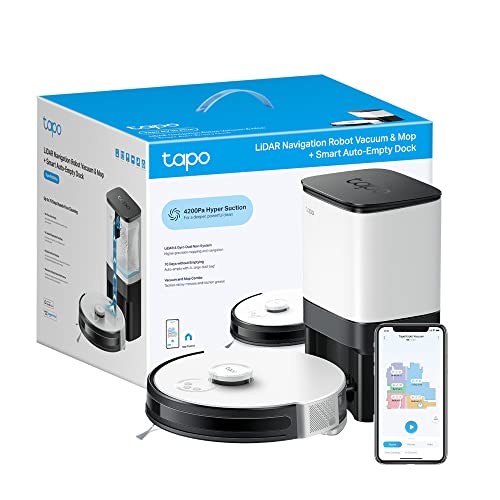
Lidar creates a vivid image of the surrounding area with its laser precision and technological finesse. Its real-time mapping technology allows automated vehicles to navigate with unbeatable precision.
LiDAR systems emit rapid pulses of light that collide with the surrounding objects and bounce back, allowing the sensors to determine the distance. This information is stored as a 3D map.
SLAM algorithms
SLAM is an algorithm that helps robots and other vehicles to understand their surroundings. It utilizes sensors to map and track landmarks in an unfamiliar setting. The system can also identify the position and orientation of the robot. The SLAM algorithm can be applied to a range of sensors, like sonar and LiDAR laser scanner technology cameras, and LiDAR laser scanner technology. However the performance of different algorithms is largely dependent on the type of software and hardware employed.
A SLAM system is comprised of a range measuring device and mapping software. It also includes an algorithm for processing sensor data. The algorithm may be based on RGB-D, monocular, stereo or stereo data. Its performance can be enhanced by implementing parallel processes using GPUs embedded in multicore CPUs.
Environmental factors and inertial errors can cause SLAM to drift over time. The map produced may not be accurate or reliable enough to support navigation. Fortunately, the majority of scanners available offer features to correct these errors.
SLAM compares the tikom l9000 robot vacuum: precision navigation powerful 4000pa's Lidar data to the map that is stored to determine its location and orientation. It then estimates the trajectory of the robot based on this information. SLAM is a technique that can be used for certain applications. However, it has many technical difficulties that prevent its widespread use.
One of the most important issues is achieving global consistency, which is a challenge for long-duration missions. This is due to the high dimensionality in sensor data and the possibility of perceptual aliasing where different locations seem to be similar. Fortunately, there are countermeasures to solve these issues, such as loop closure detection and bundle adjustment. It is a difficult task to achieve these goals, however, with the right sensor and algorithm it is achievable.
Doppler lidars
Doppler lidars are used to determine the radial velocity of objects using optical Doppler effect. They employ a laser beam to capture the laser light reflection. They can be utilized on land, air, and even in water. Airborne lidars are used for aerial navigation as well as range measurement and measurements of the surface. These sensors are able to detect and track targets at distances of up to several kilometers. They are also employed for monitoring the environment, including seafloor mapping and storm surge detection. They can also be combined with GNSS to provide real-time data for autonomous vehicles.
The main components of a Doppler LiDAR system are the scanner and the photodetector. The scanner determines the scanning angle as well as the angular resolution for the system. It can be an oscillating pair of mirrors, a polygonal mirror, or both. The photodetector can be an avalanche silicon diode or photomultiplier. Sensors must also be extremely sensitive to ensure optimal performance.
Pulsed Doppler lidars designed by research institutes like the Deutsches Zentrum fur Luft- und Raumfahrt (DLR which is literally German Center for Aviation and Space Flight) and commercial companies like Halo Photonics have been successfully applied in aerospace, wind energy, and meteorology. These systems can detect wake vortices caused by aircrafts and wind shear. They are also capable of measuring backscatter coefficients and wind profiles.
To estimate airspeed and speed, the Doppler shift of these systems can be compared to the speed of dust as measured by an in-situ anemometer. This method is more precise than conventional samplers, which require the wind field to be disturbed for a short period of time. It also gives more reliable results for wind turbulence compared to heterodyne measurements.
InnovizOne solid-state Lidar sensor
Lidar sensors scan the area and identify objects with lasers. They are crucial for research on self-driving cars however, they can be very costly. Innoviz Technologies, an Israeli startup is working to reduce this cost by advancing the development of a solid state camera that can be used on production vehicles. Its new automotive grade InnovizOne sensor is specifically designed for mass-production and provides high-definition, intelligent 3D sensing. The sensor is indestructible to sunlight and bad weather and delivers an unbeatable 3D point cloud.
The InnovizOne can be concealed into any vehicle. It can detect objects as far as 1,000 meters away. It has a 120 degree area of coverage. The company claims that it can detect road lane markings, vehicles, pedestrians, and bicycles. Its computer-vision software is designed to categorize and recognize objects, as well as identify obstacles.
Innoviz is partnering with Jabil which is an electronics design and manufacturing company, to develop its sensors. The sensors should be available by the end of next year. BMW, a major automaker with its own in-house autonomous driving program is the first OEM to utilize InnovizOne in its production cars.
Innoviz is backed by major venture capital companies and has received significant investments. The company has 150 employees, including many who served in the elite technological units of the Israel Defense Forces. The Tel Aviv, Israel-based company plans to expand its operations into the US and Germany this year. Max4 ADAS, a system from the company, includes radar ultrasonics, lidar cameras and a central computer module. The system is intended to provide Level 3 to Level 5 autonomy.
lidar vacuum cleaner technology
LiDAR (light detection and ranging) is like radar (the radio-wave navigation system used by planes and ships) or sonar (underwater detection using sound, mainly for submarines). It makes use of lasers to send invisible beams of light in all directions. The sensors determine the amount of time it takes for the beams to return. The data is then used to create 3D maps of the surrounding area. The data is then utilized by autonomous systems, including self-driving vehicles to navigate.
A lidar system consists of three major components that include the scanner, the laser and the GPS receiver. The scanner regulates the speed and range of laser pulses. The GPS tracks the position of the system that is used to calculate distance measurements from the ground. The sensor receives the return signal from the target object and converts it into a three-dimensional x, y, and z tuplet of point. The SLAM algorithm uses this point cloud to determine the position of the object being targeted in the world.
In the beginning, this technology was used for aerial mapping and surveying of land, particularly in mountainous regions where topographic maps are difficult to produce. It's been utilized more recently for measuring deforestation and mapping riverbed, seafloor and detecting floods. It has even been used to find ancient transportation systems hidden beneath the thick forests.
You may have witnessed LiDAR technology in action before, when you observed that the bizarre, whirling can thing on the top of a factory floor robot or a self-driving car was spinning around firing invisible laser beams in all directions. It's a LiDAR, generally Velodyne that has 64 laser scan beams, and a 360-degree view. It has an maximum distance of 120 meters.
Applications using LiDAR
The most obvious application for LiDAR is in autonomous vehicles. The technology is used to detect obstacles and create information that aids the vehicle processor avoid collisions. ADAS stands for advanced driver assistance systems. The system also detects the boundaries of lane lines and will notify drivers if the driver leaves a lane. These systems can either be integrated into vehicles or sold as a standalone solution.
LiDAR is also used to map industrial automation. It is possible to make use of robot vacuum cleaners equipped with LiDAR sensors for navigation around objects such as table legs and shoes. This will save time and reduce the chance of injury resulting from tripping over objects.
Similar to the situation of construction sites, LiDAR can be utilized to improve security standards by determining the distance between human workers and large machines or vehicles. It can also provide remote operators a third-person perspective which can reduce accidents. The system can also detect the load's volume in real time which allows trucks to be sent automatically through a gantry and improving efficiency.
LiDAR can also be used to detect natural hazards such as tsunamis and landslides. It can measure the height of flood and the speed of the wave, which allows researchers to predict the effects on coastal communities. It can also be used to observe the movements of ocean currents and the ice sheets.
Another aspect of lidar that is interesting is its ability to scan an environment in three dimensions. This is done by sending a series of laser pulses. The laser pulses are reflected off the object and the result is a digital map. The distribution of light energy that is returned is recorded in real-time. The highest points are the ones that represent objects like trees or buildings.
댓글목록
등록된 댓글이 없습니다.